What is the Heart of an AI

There are plenty of reasons to be skeptical that the current trajectory of AI will yield machines out of which conscious entities emerge. One that gets thrown around quite often is that the AIs need bodies! The bodies would not only empower AI without movement capabilities, but also the sensory mechanisms to see, hear, smell, even touch the world around them. An embodied AI might be a humanoid robot like Digit or Figure (probably further away than you think), though my favorite contender for the first embodied AI is a fungibot. I watched The Last of Us and figured sure, yeah, the fungi are going to bring on the apocalypse by fusing with human nervous tissue and turning us into zombies – but no, they might just fuse with machines!
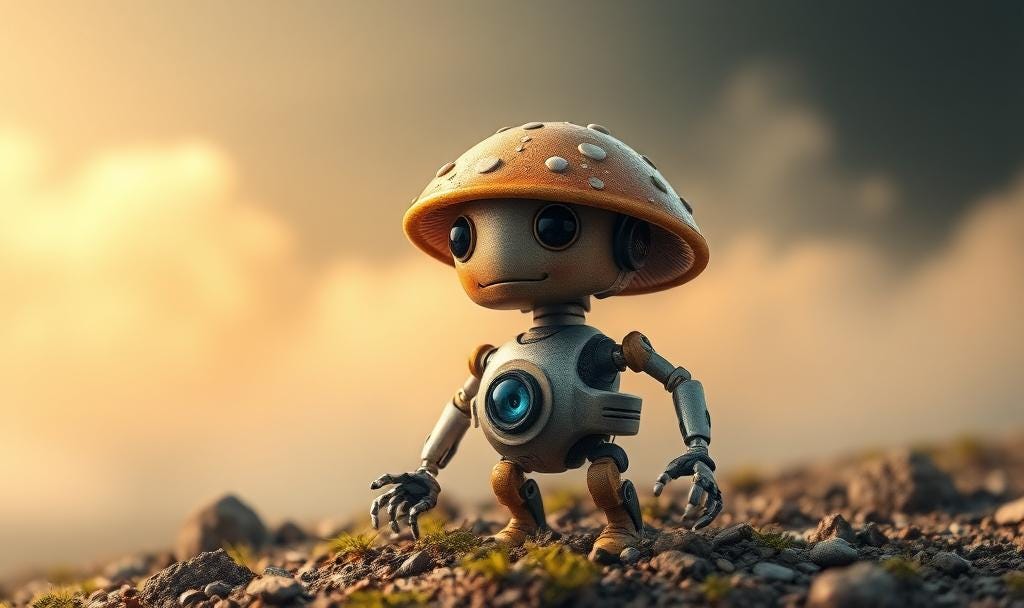
AI embodiment is at the heart of the AI bubble we’re in, fueling valuations based on AI companies extracting value equal to that created by all of human labor today. But what is at the heart of AI embodiment?
So many of us have grown up believing the seat of consciousness is in our brain. The “I” that you think you are is “up there” in your head. This belief is reflected in phrases like “it’s all in your head,” in my opinion one of the most damaging things you can say to someone struggling with feelings of depression or other “mental” ails. It’s also been backed up by countless scientific studies of neurological anomalies that show how drastic brain injury can yield changes in behavior – most famously the split brain studies, a topic I’ll come back to in the future.
Many scientists still believe this, and my impression is that many in the AI community do as well. But even if you’re a materialist and believe that consciousness emerges from matter, I believe you have to reckon with the lived experience of the human heart. Very specifically, I find myself thinking on an almost daily basis about the emerging evidence from transplant patients that suggests the human heart may store memory, personality characteristics, and preferences including for music, taste, colors, and even sex.
The paper I linked to offers narrative case studies from transplant patients, and points toward hypotheses as to how these patients experiences could validated by science. But these are mere hypotheses, and those who want robust data, clinical studies, scientifically validated explanatory pathways, and that sort of thing, will be disappointed and may be inclined to write this all off as a flight of fancy, mysticism, fantasy, anything but a possible truth. I bias toward believing that if a significant number of people are reporting a particular type of experience, there is likely truth in it that may go beyond science’s current explanatory capacity. IOW, I definitely think the human heart has capacities science doesn’t yet understand, and memory and personality may be some of them.
So I’ll finish for this week with a simple question: What would it mean for the current AI endeavor if the human heart was a key locus of consciousness – and what if this being true pointed toward a different type of “intelligence” than the analytical 0/1 kind we’re currently building at scale?